

















Living with cervical dystonia can feel exhausting. The constant pulling, stiffness, and discomfort in the neck can affect even the simplest daily activities. While treatments like medication or injections may help, gentle daily exercises can play a powerful role in improving control, reducing tightness, and supporting better posture.
The key is not intensity—but consistency and correct technique.
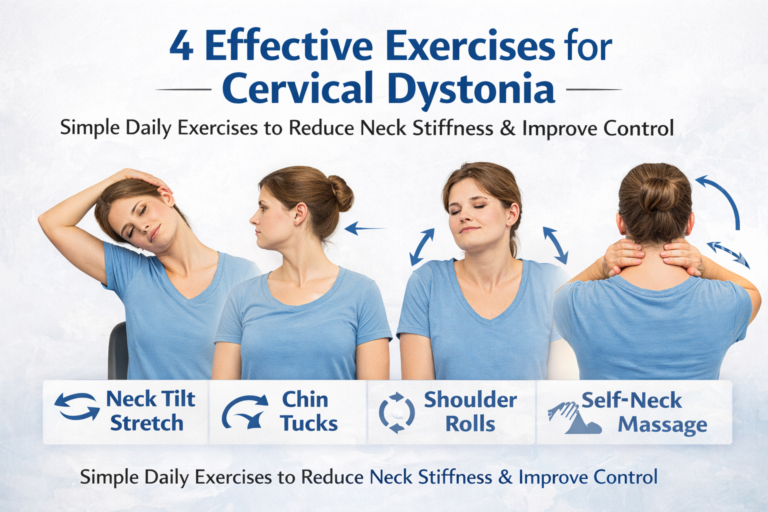
Below are four safe and effective exercises, along with simple instructions you can follow at home.
1. Neck Tilt Stretch (Side Stretch)
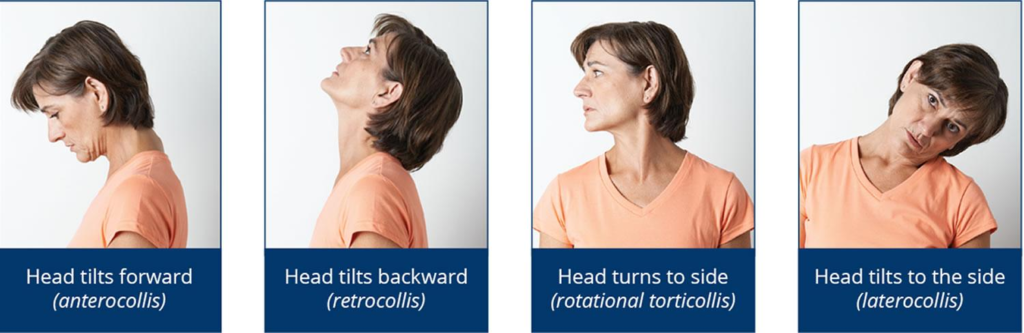
This exercise helps release tight muscles on the sides of the neck, which are often overactive in cervical dystonia.
How to do it:
- Sit comfortably with your back straight
- Slowly tilt your head toward one shoulder
- Place your hand gently on the opposite side of your head
- Apply very light pressure to deepen the stretch
- Hold for 10–20 seconds, then return to center
- Repeat on the other side
Tip: Keep your shoulders relaxed and avoid lifting them during the stretch.
2. Chin Tucks (Posture Reset)
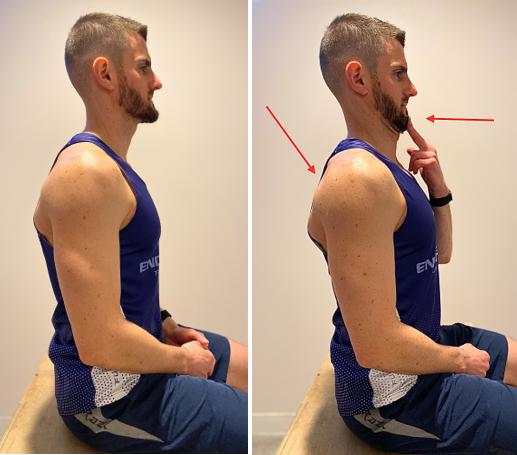
Chin tucks are excellent for improving posture and reducing forward head position, which can worsen dystonia symptoms.
How to do it:
- Sit or stand upright
- Look straight ahead
- Gently pull your chin backward (like making a double chin)
- Keep your head level—don’t tilt up or down
- Hold for 3–5 seconds, then relax
Repeat 10–15 times.
3. Shoulder Rolls
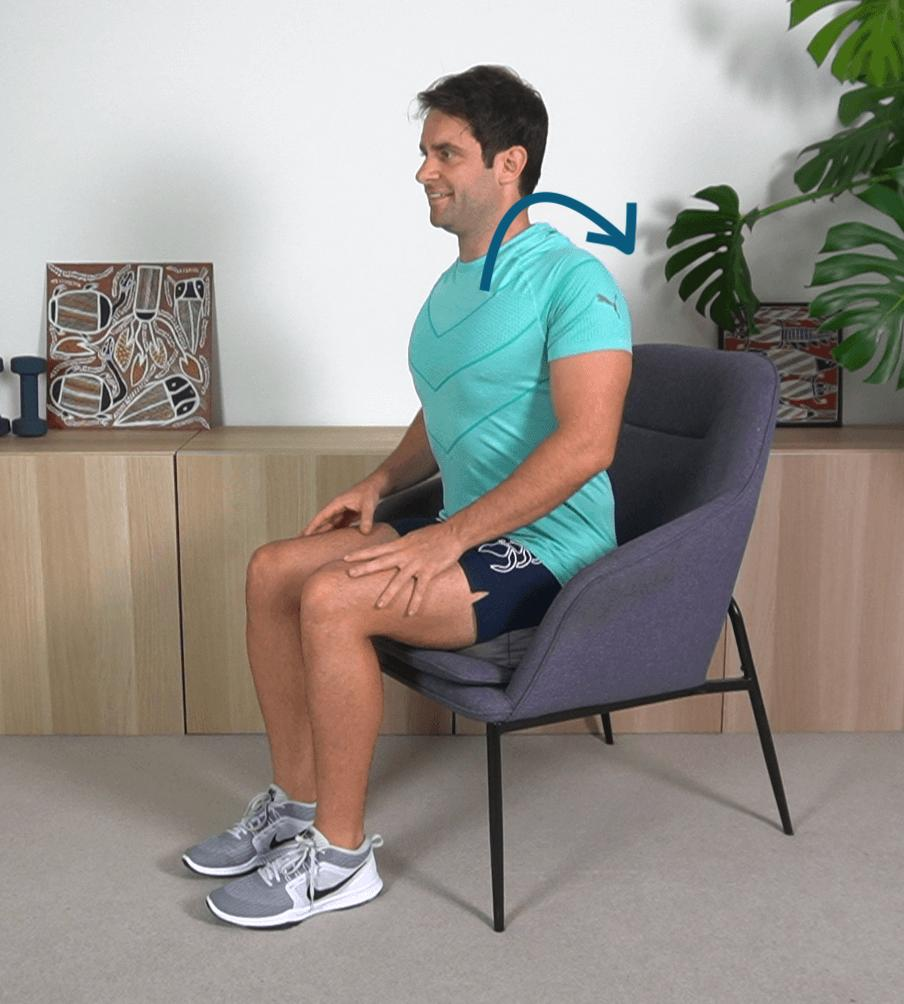
Tension in the shoulders often makes neck symptoms worse. This simple movement helps release that pressure.
How to do it:
- Sit or stand comfortably
- Lift your shoulders up toward your ears
- Slowly roll them backward in a circular motion
- Relax them down
Do 10 slow rolls backward, then 10 forward.
4. Self Neck Massage (Base of Skull)
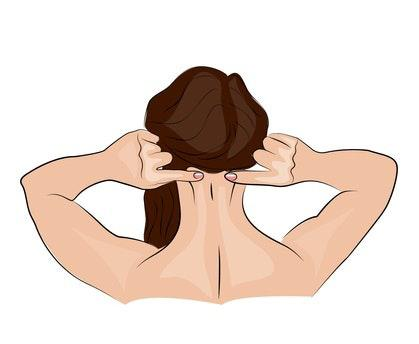
This technique helps reduce muscle tightness and improve blood flow to the affected areas.
How to do it:
- Use your fingertips to locate the base of your skull
- Gently press into tight or tender spots
- Use small circular motions
- Keep the pressure light and controlled
Continue for 1–2 minutes, focusing on areas that feel tight.
Final Thoughts
These exercises may seem simple, but when done regularly, they can make a noticeable difference. The goal is not to force movement but to gently guide your body toward better control and relaxation.
Always remember:
- Move slowly and avoid sudden motions
- Never push into pain
- Stay consistent—daily practice matters more than intensity
Many people also find that combining these exercises with light touch (a sensory trick) and deep breathing can further help reduce spasms.
FAQs
1. How often should I do these exercises?
Ideally, 2–3 times a day, depending on your comfort level.
2. Can exercises cure cervical dystonia?
Exercises do not cure the condition, but they can significantly help manage symptoms and improve quality of life.
3. When will I see results?
Some people feel relief within days, while others may take a few weeks of consistent practice.
4. Should I stop if I feel discomfort?
Yes. Stop immediately if you feel pain, dizziness, or increased spasms.



0 Comments