













There is a moment many people with dystonia remember clearly, even if they could not explain it at the time. Something felt off. A movement that should have been simple suddenly became awkward, strained, or completely out of control. It may have started with a blinking eye that would not settle, a neck that pulled to one side without warning, or a hand that refused to cooperate while writing.
At first, it feels like a passing issue. Maybe stress. Maybe fatigue. But then it keeps happening. And slowly, the realization begins to sink in that this is not something ordinary.
What makes dystonia so difficult to understand is that the muscles themselves are not the real problem. The issue lies deeper, inside the brain, where signals that are supposed to guide smooth and coordinated movement begin to misfire.
This is the story of those signals, how they go wrong, and why scientists are finally starting to understand what has long been a neurological mystery.
The Body Moves Because the Brain Decides It Should
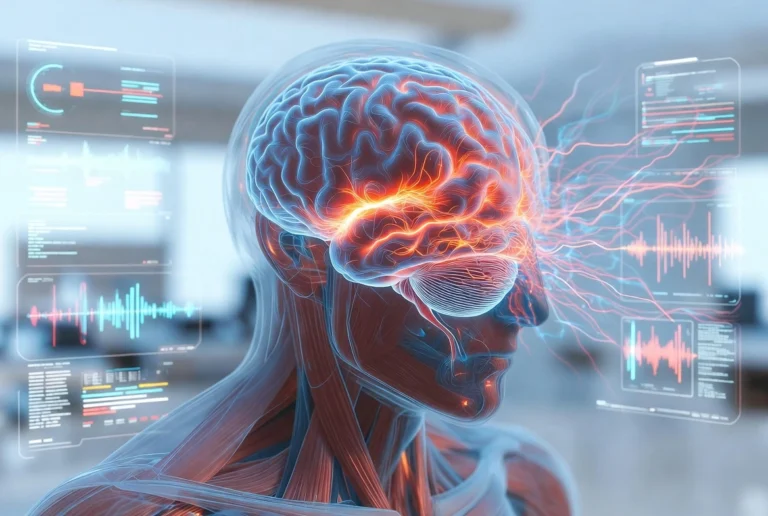
Every movement you make, from turning your head to lifting a cup, begins as an electrical signal inside your brain.
These signals travel through carefully organized pathways, activating some muscles while relaxing others. This balance is what allows movement to feel natural and effortless.
In a healthy system, this process is precise. The brain knows exactly how much force to use, how long to hold a movement, and when to stop.
In dystonia, this precision breaks down. Signals become mixed, exaggerated, or poorly timed. Muscles that should stay relaxed suddenly contract, while others fail to respond correctly.
The result is not just movement, but movement that feels forced, repetitive, and often painful.
Researchers at the National Institute of Neurological Disorders and Stroke explain that dystonia is linked to disruptions in the brain’s motor control system, particularly involving areas responsible for coordinating movement.
https://www.ninds.nih.gov/health-information/disorders/dystonias
This is where the mystery begins.
The Basal Ganglia: The Brain’s Movement Control Hub
Deep within the brain lies a group of structures known as the basal ganglia. These structures act like a control center, filtering and refining movement signals before they are sent to the body.
Think of it as a system that prevents unnecessary movements while allowing intentional ones to flow smoothly.
In dystonia, this system does not work the way it should. Instead of filtering signals correctly, it allows too many signals to pass through or sends them in the wrong pattern.
This creates a kind of neurological “noise,” where muscles receive confusing instructions.
The outcome is exactly what patients experience: twisting movements, abnormal postures, and muscle contractions that seem impossible to control.
Studies have shown that this dysfunction is not due to visible damage, but rather a breakdown in how signals are processed.
This distinction is important. It means dystonia is not about something being destroyed in the brain, but about something not working in harmony.
It Is Not Just One Area, It Is a Network Problem
For a long time, scientists focused only on the basal ganglia. But newer research has changed that view.
Dystonia is now understood as a disorder involving multiple brain regions working together, or rather, failing to work together.
These include:
- The cerebellum, which helps fine-tune movement
- The motor cortex, which initiates voluntary actions
- Sensory areas, which provide feedback about body position
When these regions fall out of sync, the brain loses its ability to control movement smoothly.
This explains why dystonia can look very different from one person to another. In some, it affects only the eyes. In others, it spreads to the neck, limbs, or even the entire body.
The variation is not random. It reflects how different parts of the network are involved.
Chemical Imbalance: The Role of Neurotransmitters
Brain signals depend on chemicals called neurotransmitters.
In dystonia, key neurotransmitters appear to be out of balance, especially dopamine, GABA, and acetylcholine.
Dopamine plays a major role in movement control. When its signaling is disrupted, the brain struggles to regulate muscle activity properly.
GABA acts as a calming influence, preventing excessive movement. When this system weakens, muscles may become overactive.
Acetylcholine influences muscle contraction and coordination. An imbalance here can further complicate the system.
According to research highlighted by MedlinePlus, these chemical disruptions contribute significantly to how dystonia develops and behaves.
https://medlineplus.gov/genetics/condition/dystonia/
What is striking is that dystonia is not caused by a simple increase or decrease in one chemical, but by a breakdown in how these systems interact.
It is a communication problem at the most fundamental level.
Why the Brain Gets It Wrong
This is the question that matters most.
Why do these signals become faulty in the first place?
There is no single answer, but several factors are known to play a role.
Genetics
Some forms of dystonia are inherited. Specific gene mutations affect how brain cells function and communicate.
However, not everyone with these genes develops symptoms, which suggests that genetics alone is not enough.
Environmental Triggers
In many cases, dystonia appears after a triggering event.
This could include:
- Physical injury
- Long-term use of certain medications
- Infections affecting the brain
- Exposure to toxins
These triggers may disrupt already vulnerable brain circuits, pushing them into dysfunction.
Learned Movement Patterns
There is growing evidence that dystonia may also involve abnormal learning in the brain.
The brain constantly adapts based on repeated movements. In some cases, this learning process becomes distorted, reinforcing incorrect patterns.
This is often seen in task-specific dystonias, such as writer’s cramp or musician’s dystonia.
Sensory Confusion: When the Brain Misreads the Body
One of the most fascinating aspects of dystonia is how sensory input affects it.
Many patients discover that touching a certain part of their body can temporarily reduce symptoms.
This is not random. It suggests that the brain is misinterpreting sensory information.
The brain relies on feedback from the body to guide movement. When this feedback is inaccurate or poorly processed, movement becomes unstable.
This is why small sensory changes can sometimes “reset” the system, even if only for a short time.
Why It Feels Worse Under Stress
Stress does not cause dystonia, but it can make it more noticeable.
When the body is under stress, the brain’s control systems become less stable. Signals become more erratic, and symptoms can intensify.
This connection highlights how closely movement control is tied to emotional and mental states.
It also explains why rest, relaxation, and proper sleep can sometimes reduce symptom severity.
The Challenge of Diagnosis
Because dystonia involves subtle changes in brain signaling rather than visible damage, it can be difficult to diagnose early.
There is no single test that confirms it. Doctors rely on observing symptoms, understanding patterns, and ruling out other conditions.
This process can take time, especially when symptoms are mild or inconsistent.
The Mayo Clinic notes that the variability of dystonia symptoms is one of the main reasons it is often misdiagnosed or diagnosed late.
https://www.mayoclinic.org/diseases-conditions/dystonia/symptoms-causes/syc-20350480
This delay can be frustrating, but it also reflects how complex the condition truly is.
New Research Is Changing the Picture
There is real progress happening.
Advanced imaging techniques are allowing scientists to observe brain activity in ways that were not possible before. Patterns of abnormal signaling are becoming clearer.
There is also growing interest in treatments that target brain circuits directly, such as deep brain stimulation, which can help restore more normal signaling patterns.
Organizations like the Dystonia Medical Research Foundation continue to support research aimed at understanding these mechanisms and improving treatment options.
https://dystonia-foundation.org
The more we learn, the less mysterious dystonia becomes.
What This Means for People Living With Dystonia
Understanding that dystonia is a brain signaling disorder changes how it is viewed.
It is not a problem of effort or willpower. It is not something that can simply be pushed through.
It is a neurological condition where the brain is sending the wrong instructions, despite the person’s intention to move normally.
This understanding can be both validating and empowering. It shifts the focus from blame to biology, from confusion to clarity.
Important Disclaimer
This article is for informational purposes only and should not be considered medical advice. If you are experiencing unusual or persistent muscle movements, consult a qualified neurologist or healthcare professional for proper evaluation and treatment.
FAQs
What causes brain signals to go wrong in dystonia?
It is usually a combination of genetic factors, chemical imbalances, and disruptions in brain networks that control movement.
Is dystonia a brain disease or a muscle problem?
It is primarily a brain disorder affecting how movement signals are processed.
Can dystonia be reversed?
There is no complete cure yet, but treatments can significantly reduce symptoms and improve quality of life.
Why do symptoms vary so much between people?
Different brain regions and networks are involved in each case, leading to varied symptoms.
Does early treatment help?
Yes, early diagnosis and treatment can make a meaningful difference in managing symptoms.
Final Thoughts
Dystonia has long been seen as a puzzle without clear answers, a condition that affects movement in ways that seem unpredictable and difficult to explain.
But the picture is becoming clearer.
At its core, dystonia is about communication, about signals in the brain that lose their rhythm and begin to interfere with the body’s natural flow of movement.
Understanding this does not solve everything, but it changes everything.
It replaces uncertainty with knowledge, and in doing so, it brings us one step closer to better treatments, earlier diagnosis, and a future where this condition is no longer a mystery.


0 Comments