















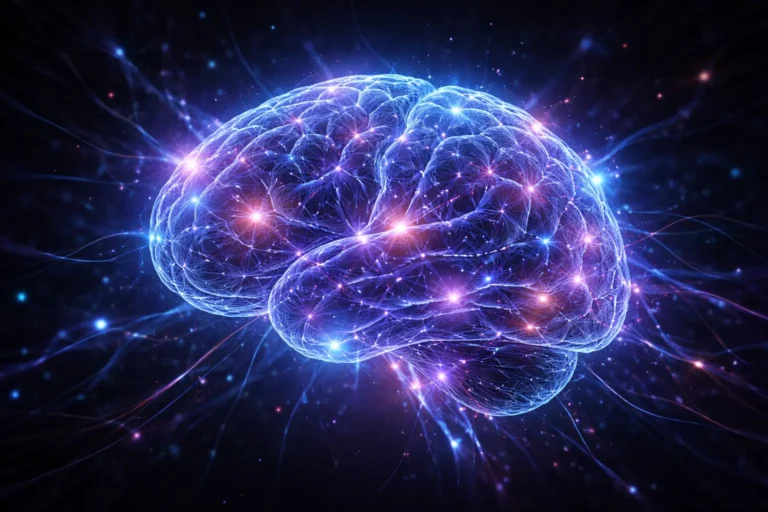
There are moments in medical science when a quiet discovery begins to echo loudly across the world, and right now, that moment may be unfolding in the study of dystonia, a condition that has long confused doctors, frustrated patients, and remained hidden in plain sight inside the human brain. For years, dystonia was seen as a problem rooted mainly in one part of the brain, but new research is beginning to challenge that belief in a powerful way, opening doors that many thought would remain closed for decades.
Dystonia is not rare, but it is often misunderstood. People living with it experience involuntary muscle contractions that can twist, pull, or freeze parts of the body in uncomfortable and sometimes painful positions. It can affect the neck, eyes, hands, voice, or even the entire body, and yet despite its impact, it is still one of the least understood neurological movement disorders.
Now, scientists are taking a deeper look, not just at isolated brain regions, but at the connections between them, and what they are finding is reshaping everything we thought we knew.
A Shift in Thinking: From Single Region to Brain Networks
For decades, the spotlight has been on the basal ganglia, a group of structures deep within the brain known to control movement. Many believed that dystonia began and ended there. But newer studies suggest the story is far more complex, and far more fascinating.
Researchers are now focusing on how different parts of the brain communicate with each other. Instead of blaming one area, they are mapping entire networks, looking at how signals travel between regions like the cerebellum, cortex, and basal ganglia.
This shift may sound technical, but its meaning is simple and powerful: dystonia may not be caused by a single faulty switch, but by a network that is slightly out of sync.
One recent study published on the National Center for Biotechnology Information platform (https://www.ncbi.nlm.nih.gov) highlights how abnormal signaling between these regions may disrupt the brain’s ability to control movement smoothly.
Another research effort discussed by the Dystonia Medical Research Foundation (https://dystonia-foundation.org) shows that even small miscommunications between pathways can lead to the symptoms patients experience daily.
This is not just a theory anymore. It is becoming a framework that could redefine diagnosis and treatment.
The Hidden Role of the Cerebellum
One of the most surprising findings in recent years is the growing importance of the cerebellum, a part of the brain traditionally linked with balance and coordination.
For a long time, the cerebellum was not considered a major player in dystonia. That assumption is now being challenged.
Scientists have discovered that the cerebellum communicates closely with the basal ganglia through complex loops. When these loops become disrupted, the brain may send incorrect movement signals, leading to the twisting and repetitive motions seen in dystonia.
This discovery is crucial because it explains something patients have long reported: symptoms that change with stress, fatigue, or even emotional states. These are factors that influence broader brain networks, not just isolated regions.
Research highlighted by Nature Neuroscience (https://www.nature.com) has shown that abnormal cerebellar activity may actually trigger or amplify dystonia symptoms, rather than simply responding to them.
This changes everything.
Why This Discovery Matters More Than Ever
For patients, dystonia is not just a diagnosis. It is often a long journey filled with uncertainty, misdiagnosis, and delayed treatment.
Many people spend years being told their symptoms are psychological or stress-related before receiving the correct diagnosis. That delay can be devastating, both physically and emotionally.
Understanding these newly discovered brain pathways could help change that.
If doctors begin to view dystonia as a network disorder, they may be able to detect it earlier, using advanced brain imaging techniques that track connectivity rather than just structure.
This could lead to faster diagnoses, more accurate treatment plans, and better outcomes.
It also opens the door to new therapies that target communication between brain regions, rather than focusing on one single area.
A New Direction for Treatment
Traditional treatments for dystonia include medications, botulinum toxin injections, and in some cases, deep brain stimulation (DBS). While these treatments can be effective, they do not work for everyone, and their results can vary widely.
The new understanding of brain pathways could change how these treatments are used, and even lead to entirely new ones.
For example, deep brain stimulation has typically targeted the basal ganglia, but future approaches may involve multiple brain regions or even aim to restore communication between networks.
There is also growing interest in non-invasive treatments such as transcranial magnetic stimulation (TMS), which could help “reset” abnormal brain activity patterns.
According to insights shared by the National Institute of Neurological Disorders and Stroke (https://www.ninds.nih.gov), future therapies may focus on recalibrating neural circuits rather than simply suppressing symptoms.
This is a subtle but important shift, and it offers real hope.
The Human Side of the Science
Behind every study, every scan, and every new discovery are real people living with dystonia, often in silence.
For many, this condition affects not just movement, but identity, confidence, and daily life. Simple tasks like writing, walking, or even holding eye contact can become difficult.
That is why these scientific breakthroughs matter so deeply.
They validate what patients have always known: that dystonia is complex, real, and rooted in the brain, not imagination or stress alone.
They also bring a sense of momentum, a feeling that the medical community is finally catching up to what patients have been experiencing for years.
The Road Ahead: What Comes Next
Science rarely moves in straight lines. Each discovery raises new questions, and this is no exception.
Researchers are now working to map these brain pathways in greater detail, using advanced imaging technologies and machine learning tools to understand how signals move through the brain in real time.
There is also a growing push for global collaboration, with scientists sharing data and insights to accelerate progress.
Clinical trials are already being designed to test new approaches based on these findings, and while it may take time, the direction is clear.
We are moving toward a future where dystonia is not just managed, but understood at its core.
A Careful Note for Readers
While these developments are exciting, it is important to approach them with balanced expectations.
Research is ongoing, and not all findings translate immediately into treatments. What works in a lab setting may take years to become available in clinical practice.
If you or someone you know is experiencing symptoms of dystonia, it is essential to consult a qualified neurologist for proper diagnosis and guidance.
This article is for informational purposes only and should not replace professional medical advice.
Why This Could Be a Turning Point
There are certain moments in medical research that quietly shift the entire landscape, and this may be one of them.
By moving beyond isolated brain regions and exploring the full network of connections, scientists are uncovering a deeper truth about dystonia.
It is not just about where the problem is, but how the brain communicates.
And in that understanding lies the potential for better diagnosis, better treatment, and ultimately, better lives for those affected.
FAQs
What is dystonia in simple terms?
Dystonia is a neurological condition that causes muscles to contract involuntarily, leading to abnormal movements or postures.
What new discovery have scientists made?
Researchers have found that dystonia may be linked to disrupted communication between multiple brain regions, not just one specific area.
Which parts of the brain are involved?
Key areas include the basal ganglia, cerebellum, and cortex, all of which interact through complex pathways.
Will this lead to a cure?
It is too early to say, but the discovery opens new paths for research that could lead to more effective treatments.
Can dystonia be diagnosed earlier now?
Not yet widely, but this research may help develop better diagnostic tools in the future.
Final Thoughts
The brain is still one of the greatest mysteries we face, but with every new discovery, that mystery becomes a little clearer. The exploration of new brain pathways linked to dystonia is not just another study; it is a sign that the field is evolving, that old assumptions are being challenged, and that hope is growing stronger.
For those living with dystonia, this is more than science. It is a step toward recognition, understanding, and a future that feels just a little more within reach.


0 Comments