















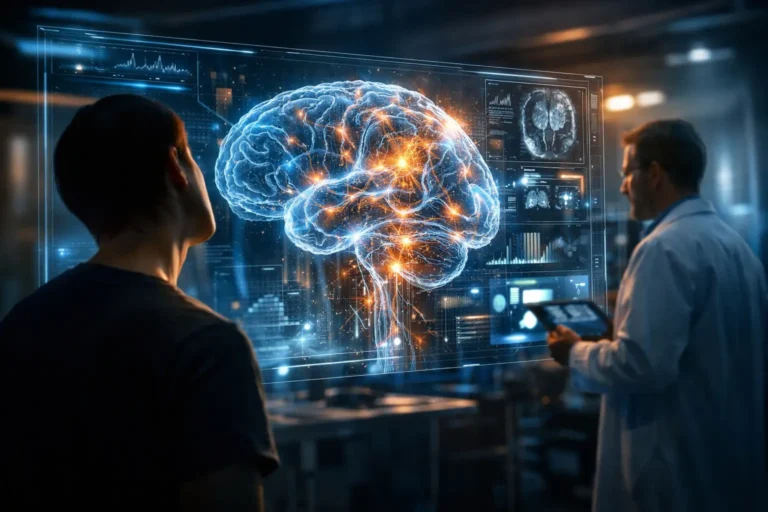
For many people living with dystonia, the hardest part is not the symptoms themselves—it is the long, exhausting journey to get a correct diagnosis. Months turn into years, and years often stretch into a decade of confusion, misdiagnosis, and frustration, where patients are told it is stress, anxiety, or something entirely unrelated, while the real condition quietly progresses beneath the surface.
Now, a new question is gaining serious attention across medical and technology circles: could artificial intelligence detect dystonia earlier than doctors? And more importantly, could it change lives by shortening that painful diagnostic delay?
This is not a futuristic fantasy anymore. It is already beginning to happen.
The Silent Delay: Why Dystonia Is So Hard to Diagnose
Dystonia is a neurological movement disorder that causes involuntary muscle contractions, leading to twisting movements, abnormal postures, and often significant pain, yet its symptoms can appear subtle at first and easily mimic other conditions, which makes early detection incredibly difficult even for experienced clinicians.
Unlike conditions with clear biomarkers or visible structural damage, dystonia often hides in plain sight. A slight neck tilt, a repetitive hand movement, or unexplained muscle tightness may not immediately raise alarm bells. Many patients are initially treated for unrelated issues such as cervical strain, anxiety disorders, or even psychological conditions.
This is where the problem begins.
Doctors rely heavily on observation, clinical experience, and patient-reported symptoms, but human judgment, no matter how skilled, has its limits, especially when dealing with rare or complex neurological conditions.
Enter Artificial Intelligence: A Different Kind of Observer
Artificial intelligence does not “see” in the way humans do. It processes patterns, data points, and subtle variations that might go unnoticed by even the most trained eyes, and this ability is exactly what makes it so powerful in detecting conditions like dystonia.
Instead of relying solely on subjective interpretation, AI systems can analyze:
- Micro-movements in muscles and posture
- Speech irregularities linked to neurological control
- Handwriting changes and motor coordination patterns
- Brain imaging data with far greater precision
- Wearable sensor data capturing continuous movement
These systems are trained using vast datasets, learning to recognize patterns associated with dystonia at stages far earlier than traditional diagnosis allows.
One emerging area of research involves using computer vision technology to analyze simple video recordings of patients, identifying abnormal movement patterns that align with dystonia, sometimes even before the symptoms become obvious to a clinician.
For a deeper understanding of how AI is transforming neurological care, you can explore research published by institutions like the
https://www.nature.com/articles/s41591-020-01181-2
which highlights the growing role of machine learning in early disease detection.
How AI Could Spot Dystonia Before It Becomes Obvious
The real strength of AI lies in its ability to detect what humans might dismiss as insignificant, and in dystonia, those small signals matter more than anything.
Imagine a scenario where a person casually records a video of themselves or uses a smartphone app that tracks subtle head movements, and within seconds, an AI model flags patterns that suggest early-stage cervical dystonia, prompting further medical evaluation long before the condition worsens.
This is not theoretical. Researchers are already experimenting with:
1. Video-Based Movement Analysis
AI models trained on thousands of patient videos can identify abnormal movement signatures, comparing them against known dystonia patterns with remarkable accuracy.
2. Wearable Technology
Smart devices can monitor muscle activity, tremors, and posture continuously, feeding real-time data into AI systems that can detect irregularities over time rather than relying on a single clinical visit.
3. Voice and Speech Analysis
Subtle changes in speech rhythm, tone, and articulation may indicate neurological involvement, and AI can analyze these nuances far more precisely than the human ear.
4. Brain Imaging Interpretation
Advanced AI models can process MRI and functional imaging data to detect patterns that may not be visible through standard analysis.
A comprehensive overview of AI in healthcare diagnostics can be found here:
https://www.ncbi.nlm.nih.gov/pmc/articles/PMC8285156/
Why Early Detection Matters More Than Ever
Dystonia is not just about movement; it affects quality of life, mental health, relationships, and the ability to work or perform everyday tasks, and the earlier it is identified, the better the chances of managing symptoms effectively.
Early diagnosis can lead to:
- Faster access to treatments such as botulinum toxin injections
- More effective physiotherapy and rehabilitation
- Reduced emotional and psychological burden
- Prevention of worsening symptoms and complications
When diagnosis is delayed, patients often develop secondary issues, including chronic pain, depression, and social withdrawal, which could have been minimized with timely intervention.
AI has the potential to change this timeline completely.
Can AI Really Be More Accurate Than Doctors?
This is the question that sparks both excitement and caution.
AI does not replace doctors, but it can enhance their capabilities by acting as a powerful support tool. In some studies, AI systems have demonstrated diagnostic accuracy equal to or even exceeding human experts in specific tasks, particularly in pattern recognition.
However, there is an important distinction to make.
Doctors bring context, empathy, and clinical reasoning, while AI brings speed, consistency, and data-driven precision. The ideal future is not a competition between the two, but a collaboration.
AI can act as an early warning system, flagging potential cases for further evaluation, while doctors make the final diagnosis and treatment decisions.
Real-World Challenges That Still Exist
Despite the promise, there are several hurdles that must be addressed before AI becomes a standard tool for dystonia diagnosis.
Data Limitations
AI models require large, high-quality datasets, and dystonia, being relatively rare, does not always provide enough data for robust training.
Bias and Accuracy
If datasets are not diverse, AI systems may struggle to accurately detect dystonia across different populations.
Accessibility
Advanced AI tools may not be readily available in all healthcare settings, particularly in regions with limited resources.
Ethical Concerns
Questions around data privacy, patient consent, and algorithm transparency must be carefully managed.
For more insights into ethical considerations in AI healthcare, refer to:
https://www.who.int/publications/i/item/9789240029200
A Glimpse Into the Future
The future of dystonia diagnosis could look very different from today.
Imagine a world where:
- A simple smartphone app screens for early signs of neurological disorders
- Routine health checkups include AI-assisted movement analysis
- Wearable devices continuously monitor neurological health
- Patients receive alerts before symptoms become severe
This shift could transform dystonia from a condition often diagnosed late into one identified early, managed effectively, and understood more clearly.
Important Disclaimer
This article is intended for informational purposes only and does not replace professional medical advice, diagnosis, or treatment. Artificial intelligence tools are still evolving and should be used as supportive systems rather than definitive diagnostic solutions. If you suspect symptoms of dystonia or any neurological condition, consult a qualified healthcare professional immediately.
Frequently Asked Questions (FAQs)
Can AI diagnose dystonia on its own?
No, AI cannot independently diagnose dystonia. It can assist by identifying patterns and suggesting the possibility of the condition, but a qualified doctor must confirm the diagnosis.
Is AI currently used in hospitals for dystonia detection?
AI is being tested and gradually introduced in research and specialized settings, but it is not yet widely used as a standard diagnostic tool for dystonia.
How accurate is AI compared to doctors?
In specific tasks like pattern recognition, AI can match or even exceed human accuracy, but it lacks the comprehensive understanding that doctors provide.
Will AI replace neurologists in the future?
No, AI is designed to support doctors, not replace them. The best outcomes come from combining AI technology with human expertise.
Can I use an app to check for dystonia today?
Some experimental tools and apps exist, but they are not yet fully reliable or approved for widespread clinical use.
Final Thoughts
For those who have spent years searching for answers, the idea that a machine could one day detect dystonia earlier than doctors is not just a technological breakthrough—it is a deeply personal hope.
AI is not perfect, and it is not a replacement for human care, but it offers something that has been missing for far too long: the possibility of being seen sooner, understood faster, and treated earlier.
And for a condition that often hides in silence, that possibility could change everything.


0 Comments