















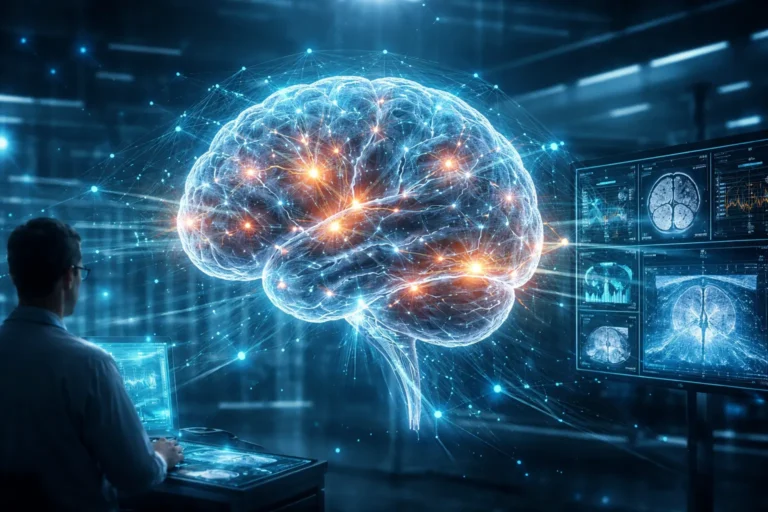
There is a quiet but powerful shift happening inside hospitals, research labs, and neurology clinics across the world, and it is not just about new medicines or surgical techniques, but about something far more transformative, which is the growing role of artificial intelligence in understanding the human brain, and for conditions like dystonia that have long puzzled even experienced doctors, this shift could change everything in ways that were once considered impossible.
For decades, diagnosing neurological disorders such as dystonia has relied heavily on clinical observation, patient history, and the trained eye of specialists, and while this approach has helped many people, it has also left room for delays, misdiagnosis, and uncertainty, especially in early stages when symptoms can be subtle, inconsistent, or easily confused with other conditions, but now with artificial intelligence entering the field, a new layer of precision is emerging that is beginning to redefine what early and accurate diagnosis could look like.
The Challenge of Diagnosing Dystonia
Dystonia is not a single, simple condition that can be confirmed with a straightforward test, but rather a complex neurological disorder that can appear in different forms, affect different parts of the body, and vary widely from person to person, which is exactly what makes it so difficult to diagnose in the first place.
A person might start with something as small as a slight neck tilt, an unusual blink pattern, or a cramp in the hand while writing, and these early signs are often dismissed or misunderstood, sometimes even by healthcare professionals, leading to years of confusion before a clear diagnosis is finally made, and during this time, the condition may progress, affecting quality of life in ways that could have been reduced with earlier intervention.
This is where artificial intelligence begins to stand out, not as a replacement for doctors, but as a powerful support system that can analyze patterns, detect subtle signals, and assist in making more informed decisions.
How Artificial Intelligence Is Changing Diagnosis
Artificial intelligence, particularly in the form of machine learning, works by analyzing massive amounts of data and identifying patterns that may not be visible to the human eye, and in the context of neurological disorders, this means studying brain scans, movement patterns, speech changes, and even tiny variations in muscle activity.
For example, AI systems can be trained to examine MRI scans and identify abnormalities in brain connectivity that are associated with dystonia, and what makes this remarkable is not just speed, but accuracy, because these systems can compare a patient’s data with thousands of other cases within seconds, something that would take humans an enormous amount of time.
Researchers are also exploring wearable devices that collect real-time movement data, allowing AI to detect patterns in muscle activity that may indicate early signs of dystonia even before symptoms become obvious, and this kind of continuous monitoring could completely change how and when the condition is diagnosed.
Organizations like the National Institute of Neurological Disorders and Stroke (https://www.ninds.nih.gov) and the World Health Organization (https://www.who.int) are already supporting research into AI-driven healthcare solutions, highlighting the growing importance of technology in medical science.
Why Early Detection Matters So Much
One of the most important advantages of using AI in diagnosing dystonia is the potential for earlier detection, which can make a significant difference in how the condition is managed over time.
When dystonia is identified early, treatments can begin sooner, symptoms can be controlled more effectively, and patients can avoid years of uncertainty and frustration, and this is especially important because the condition often affects daily activities such as writing, walking, or even speaking, making early support crucial.
AI has the ability to pick up on patterns that may seem insignificant on their own but become meaningful when analyzed together, and this ability to connect the dots is what makes it such a powerful tool in neurology.
The Role of AI in Supporting Doctors, Not Replacing Them
There is often concern that artificial intelligence might replace doctors, but in reality, the goal is quite the opposite, because AI is designed to support medical professionals by providing additional insights and reducing the chances of human error.
A neurologist, for example, can use AI-generated analysis as an extra layer of information, helping them confirm a diagnosis or consider possibilities that might not have been immediately obvious, and this collaboration between human expertise and machine precision is where the true strength of AI lies.
Rather than taking over decision-making, AI acts as a tool that enhances the doctor’s ability to provide accurate and timely care, which ultimately benefits the patient.
Real-World Applications Already Taking Shape
What makes this discussion even more compelling is that AI is not just a future concept, but something that is already being used in real-world healthcare settings.
Hospitals and research institutions are using AI-powered software to analyze brain imaging, detect early signs of neurological conditions, and even predict how a disease might progress over time, and while much of this work is still evolving, the results so far have been promising enough to attract significant attention from the global medical community.
Platforms like ClinicalTrials.gov (https://clinicaltrials.gov) show a growing number of studies focused on AI in neurology, indicating that this is not a temporary trend but a long-term direction in medical research.
The Human Impact: More Than Just Technology
At its core, this is not just a story about technology, but about people, because every improvement in diagnosis has a direct impact on someone’s life, whether it is reducing the time it takes to get answers, improving access to treatment, or simply giving patients a clearer understanding of what they are facing.
For individuals living with dystonia, the idea that a system could detect the condition earlier and more accurately is not just exciting, it is deeply meaningful, because it represents a shift toward being seen, understood, and treated with greater precision.
Challenges That Still Need Attention
Despite its potential, artificial intelligence is not without challenges, and it is important to approach this topic with a balanced perspective.
One of the main concerns is data quality, because AI systems are only as good as the data they are trained on, and if that data is incomplete or biased, it can affect the accuracy of the results, which is why ongoing research and careful validation are essential.
There are also ethical considerations, such as data privacy and the need to ensure that AI systems are used responsibly, especially when dealing with sensitive medical information.
Important Disclaimer
While artificial intelligence is showing strong potential in diagnosing neurological disorders like dystonia, it is not a replacement for professional medical evaluation, and patients should always consult qualified healthcare providers for diagnosis and treatment decisions.
The technologies discussed are still evolving, and although early results are promising, widespread clinical use requires further testing, regulatory approval, and long-term validation.
What the Future Could Look Like
Looking ahead, it is possible to imagine a healthcare system where AI plays a central role in diagnosing and managing neurological conditions, where patients can receive faster, more accurate assessments, and where treatments are tailored to their specific needs based on detailed data analysis.
This does not mean that the journey will be simple or immediate, but the direction is clear, and the progress being made suggests that artificial intelligence could become one of the most important tools in neurology in the years to come.
For dystonia in particular, a condition that has often been misunderstood and underdiagnosed, this shift could mark the beginning of a new chapter, one where science, technology, and human care come together in a way that truly makes a difference.
Frequently Asked Questions (FAQs)
1. Can AI diagnose dystonia on its own?
No, AI is currently used as a support tool to assist doctors, not as a standalone diagnostic system.
2. How does AI help in detecting neurological disorders?
AI analyzes data such as brain scans, movement patterns, and medical history to identify patterns linked to specific conditions.
3. Is AI diagnosis more accurate than traditional methods?
AI can improve accuracy by identifying subtle patterns, but it works best when combined with expert medical evaluation.
4. Are these technologies available everywhere?
Not yet, many AI-based tools are still in research or limited clinical use, but adoption is increasing.
5. What should patients do if they suspect dystonia?
They should consult a neurologist or movement disorder specialist for proper evaluation and guidance.
Final Thoughts
Artificial intelligence is not just adding another layer to medical science, it is reshaping how we understand and approach some of the most complex conditions affecting the human brain, and while there is still much to learn and refine, the progress being made today suggests that the future of diagnosing disorders like dystonia may be faster, more accurate, and more patient-focused than ever before, offering a sense of hope that is grounded in real, measurable change rather than distant possibility.


0 Comments