
















There is a pattern many people with dystonia begin to notice only after looking back on their journey.
The symptoms did not always appear out of nowhere. Sometimes, they followed a period of intense stress, a physical injury, or a major life event that seemed to shake the body in ways that were hard to explain at the time.
It may not have been obvious in the moment, but later, the connection starts to feel too strong to ignore.
This raises a question that is both complex and deeply personal.
Can trauma, stress, or environmental factors actually trigger dystonia?
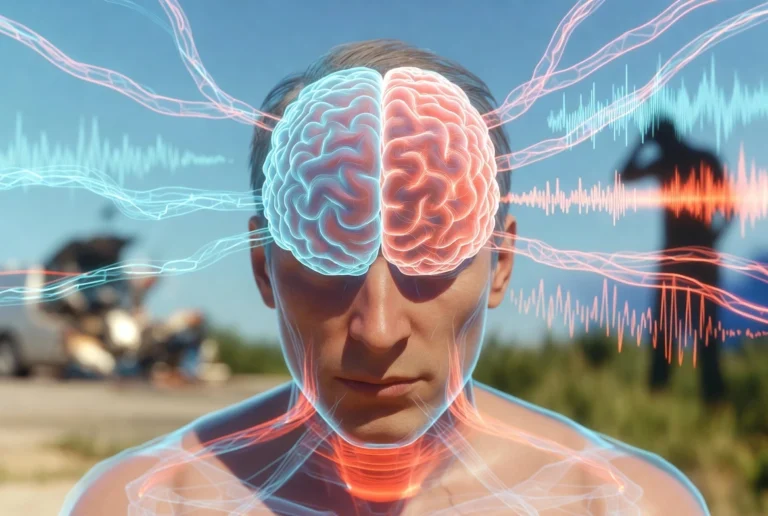
The answer is not as simple as yes or no, but science is beginning to show that these factors can play a meaningful role, not as the sole cause, but as part of a chain reaction that affects how the brain controls movement.
Understanding this connection can change how dystonia is viewed, not just as a condition that appears randomly, but as one that may be influenced by experiences the body and brain have gone through over time.
Dystonia Does Not Always Start at Birth
For some people, dystonia has a clear genetic link. But for many others, there is no obvious family history.
Symptoms begin later in life, often after a specific event or period.
This has led researchers to explore the idea that dystonia may require more than just a genetic predisposition. It may need a trigger.
The National Institute of Neurological Disorders and Stroke notes that dystonia can be inherited, acquired, or idiopathic, meaning it appears without a clear cause, but in many cases, external factors are involved.
https://www.ninds.nih.gov/health-information/disorders/dystonias
This is where trauma, stress, and environment come into the picture.
Physical Trauma and the Brain’s Response
Physical injuries, especially those involving the head, neck, or spine, have been linked to the onset of dystonia in some individuals.
This does not mean every injury leads to dystonia, but in certain cases, it appears to disrupt the brain’s movement control system.
When the body experiences trauma, the brain goes into a protective mode. It adjusts how it processes signals, sometimes increasing muscle tension to stabilize the affected area.
In most cases, this response fades as healing occurs.
But in some individuals, the system does not fully reset. The altered signaling patterns may persist, leading to abnormal muscle contractions.
This is one way trauma can act as a trigger rather than a direct cause.
Stress: The Invisible Amplifier
Stress is often misunderstood in medical conversations.
It is not just an emotional experience. It has real, measurable effects on the brain and body.
When stress levels rise, the brain’s communication systems become more active and, at times, less stable. Hormones like cortisol increase, and neural circuits involved in movement and emotion begin to interact more intensely.
For someone already vulnerable to dystonia, this can push the system out of balance.
Many patients report that their symptoms began or worsened during periods of intense stress, whether related to work, relationships, or major life changes.
The Mayo Clinic highlights that while stress does not directly cause dystonia, it can significantly influence symptom severity and progression.
https://www.mayoclinic.org/diseases-conditions/dystonia/symptoms-causes/syc-20350480
This makes stress an important piece of the puzzle.
The Environment We Live In
Environment is a broad term, but in the context of dystonia, it includes everything from physical surroundings to daily habits and exposures.
Certain environmental factors have been linked to dystonia, including:
- Exposure to toxins or chemicals
- Long-term use of specific medications
- Repetitive physical activities
- Occupational strain
For example, task-specific dystonias, such as writer’s cramp or musician’s dystonia, are often associated with repeated movements over time.
The brain adapts to these movements, but sometimes that adaptation becomes distorted, reinforcing abnormal patterns instead of correcting them.
This shows how environment and behavior can shape the way the brain controls movement.
The “Perfect Storm” Theory
One of the most widely discussed ideas in dystonia research is that it often develops when multiple factors come together.
A person may have a genetic predisposition that makes their brain more sensitive to changes in movement control.
Then, a trigger such as trauma or stress disrupts the system.
Finally, environmental factors reinforce the altered patterns.
When these elements combine, dystonia symptoms may begin to appear.
This layered explanation helps make sense of why the condition affects people so differently.
Why Some People Are More Vulnerable
Not everyone exposed to stress or trauma develops dystonia.
This suggests that vulnerability varies from person to person.
Factors that may influence this include:
- Genetic makeup
- Brain chemistry
- Previous neurological health
- Lifestyle and recovery patterns
Research shared by the Dystonia Medical Research Foundation supports the idea that dystonia often results from a combination of internal and external influences rather than a single cause.
https://dystonia-foundation.org
This complexity is what makes the condition so challenging to predict.
The Brain Learns, Even When It Should Not
The brain is designed to learn from experience.
But sometimes, it learns the wrong patterns.
After an injury or repeated movement, the brain may begin to associate certain signals with protection or efficiency. Over time, these patterns can become automatic, even if they are not helpful.
This is particularly evident in task-specific dystonia, where the brain essentially “locks in” an abnormal movement pattern.
Breaking this cycle requires retraining the brain, which is why therapies often focus on movement re-education.
Emotional Trauma and Its Physical Impact
Emotional trauma can also play a role, although this connection is more complex and less understood.
The brain does not separate emotional and physical experiences as cleanly as we might think.
Regions involved in emotion are closely linked to those controlling movement. When emotional stress is intense or prolonged, it can influence how these systems interact.
This does not mean dystonia is psychological. It means the brain’s response to emotional experiences can affect physical function.
Recognizing this connection can lead to more comprehensive approaches to treatment.
Why Timing Matters
One of the most interesting aspects of dystonia triggers is timing.
Symptoms do not always appear immediately after a triggering event. They may develop weeks, months, or even years later.
This delay makes it harder to identify the connection.
But it also suggests that dystonia develops gradually, as the brain adapts to changes over time rather than reacting instantly.
What This Means for Diagnosis
Understanding triggers can help doctors look beyond obvious causes.
Instead of focusing only on current symptoms, they may consider a patient’s history, including injuries, stress levels, and environmental exposures.
This broader view can lead to earlier recognition and more accurate diagnosis.
Managing Triggers Without Blame
It is important to approach this topic carefully.
Recognizing triggers is not about assigning blame. It is about understanding how different factors interact.
No one chooses to experience trauma or stress, and not all environmental exposures are within a person’s control.
The goal is not to look backward with regret, but forward with awareness.
Practical Steps That Can Help
While triggers cannot always be avoided, there are ways to support the brain and reduce symptom impact.
These include:
- Managing stress through relaxation techniques
- Maintaining good sleep habits
- Seeking early medical advice after injuries
- Taking breaks during repetitive activities
These steps do not prevent dystonia in every case, but they can support overall neurological health.
Important Disclaimer
This article is for informational purposes only and should not be considered medical advice. If you are experiencing symptoms of dystonia or have concerns about potential triggers, consult a qualified neurologist or healthcare professional for proper evaluation and guidance.
FAQs
Can stress cause dystonia?
Stress does not directly cause dystonia, but it can trigger or worsen symptoms in vulnerable individuals.
Can physical injury lead to dystonia?
In some cases, injuries may disrupt brain signaling and contribute to the onset of symptoms.
Are environmental factors important?
Yes, factors like repetitive movements, medications, and toxins can influence how dystonia develops.
Why do symptoms appear later after a trigger?
Dystonia often develops gradually as the brain adapts to changes over time.
Can managing stress improve symptoms?
For many people, reducing stress can help decrease symptom severity.
Final Thoughts
Dystonia is not a condition that can be explained by a single cause.
It is shaped by a combination of biology, experience, and environment, a complex interaction between what the brain is built with and what it goes through.
Trauma, stress, and environmental factors do not act alone, but they can influence when and how symptoms appear.
Understanding this does not simplify the condition, but it brings clarity.
It shows that dystonia is not random, even if it feels that way at first. It is part of a larger story, one that science is slowly learning to read, and one that, with time, may lead to better ways of preventing, diagnosing, and treating this challenging condition.



0 Comments