

















There is a certain kind of frustration that comes from knowing your body is not behaving the way it should, yet being told again and again that everything looks normal, or worse, that it might just be stress.
For many people living with dystonia, this is not a short phase. It can stretch across years, sometimes even a decade, before someone finally connects the dots and gives it a name.
During that time, the condition is often mistaken for something else entirely. Anxiety is a common label. Parkinson’s disease is another. In some cases, people are told it is simply muscle tension or poor posture.
None of these explanations fully capture what is actually happening, but they are close enough to create confusion, and that confusion is where the delay begins.
Understanding why this happens is the first step toward changing it.
When Symptoms Do Not Fit Neatly into a Box
Dystonia does not follow a predictable script.
It can begin with something as small as a twitch or a slight pulling sensation in the neck. It can appear only during certain activities, like writing or speaking, and disappear at rest.
This inconsistency makes it difficult to recognize.
Doctors are trained to look for patterns, but dystonia often breaks those patterns. It shifts, evolves, and behaves differently depending on the situation.
According to the National Institute of Neurological Disorders and Stroke, dystonia symptoms can vary widely in severity and presentation, which contributes to diagnostic challenges.
https://www.ninds.nih.gov/health-information/disorders/dystonias
When a condition refuses to fit into a clear category, it often ends up being placed into the closest available one.
Why Dystonia Gets Mistaken for Anxiety
At first glance, the connection might seem surprising. Dystonia is a neurological condition, while anxiety is typically viewed as psychological.
But the overlap becomes clearer when you look at how symptoms appear.
People with dystonia often experience:
- Increased muscle tension during stress
- Visible shaking or tremors
- Difficulty controlling certain movements in social situations
These signs can easily be interpreted as anxiety, especially when medical tests do not show obvious abnormalities.
There is also a timing issue. Symptoms often worsen under pressure, such as during public speaking or emotional stress, which reinforces the assumption that anxiety is the root cause.
But here is the key difference. In dystonia, the movements are not driven by thoughts or emotions alone. They are the result of misfiring signals in the brain’s movement control system.
The Mayo Clinic explains that dystonia involves involuntary muscle contractions caused by neurological dysfunction, not psychological factors.
https://www.mayoclinic.org/diseases-conditions/dystonia/symptoms-causes/syc-20350480
The emotional response may amplify the symptoms, but it does not create them.
The Parkinson’s Confusion
The comparison with Parkinson’s disease is even more common.
Both conditions involve movement problems. Both can include tremors, stiffness, and difficulty with coordination.
To someone unfamiliar with the differences, they can look almost identical.
However, the underlying mechanisms are not the same.
Parkinson’s disease is primarily linked to the loss of dopamine-producing cells in the brain. Dystonia, on the other hand, involves abnormal signaling within movement circuits, often without cell loss.
The Dystonia Medical Research Foundation highlights that while there is overlap in symptoms, dystonia and Parkinson’s are distinct conditions with different causes and treatments.
https://dystonia-foundation.org
Despite this, early-stage dystonia is frequently mistaken for Parkinson’s, especially when symptoms involve stiffness or unusual postures.
This can lead to incorrect treatments that do not address the real issue.
The Problem with “Normal” Test Results
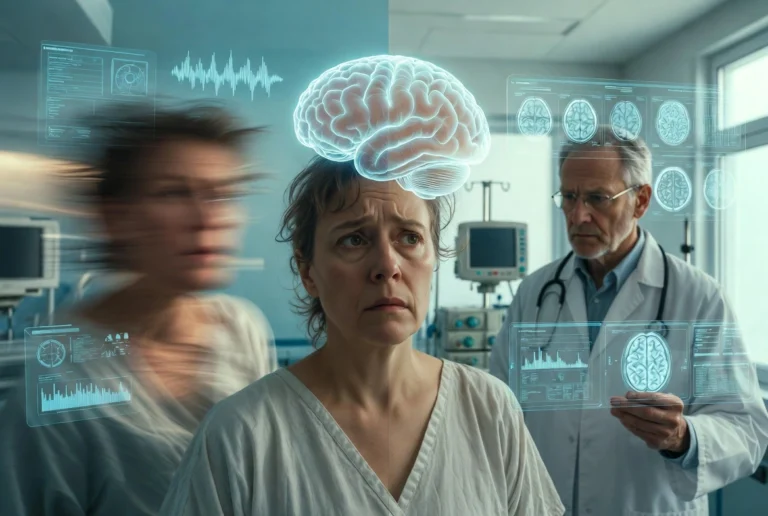
One of the most confusing aspects of dystonia is that standard medical tests often come back normal.
MRI scans may not show clear abnormalities. Blood tests may not reveal anything unusual.
For both patients and doctors, this creates uncertainty.
When tests do not provide answers, there is a tendency to look for explanations that seem more straightforward, such as anxiety or functional disorders.
But dystonia does not leave obvious fingerprints on these tests. Its effects are seen in how the brain functions, not necessarily in how it looks.
This gap between symptoms and test results is one of the biggest reasons for misdiagnosis.
How the Brain Creates the Confusion
To understand why dystonia mimics other conditions, it helps to look at what is happening inside the brain.
Movement is controlled by a network that includes the basal ganglia, cerebellum, and motor cortex. These areas must work together smoothly for normal movement to occur.
In dystonia, this coordination breaks down. Signals become disorganized. Some muscles receive too much activation, while others receive too little.
This imbalance can produce symptoms that resemble other disorders, depending on which part of the network is affected.
If the issue affects fine motor control, it may look like essential tremor. If it involves stiffness and slow movement, it may resemble Parkinson’s. If it worsens under stress, it may be mistaken for anxiety.
The condition is not changing into different diseases. It is simply expressing itself in ways that overlap with them.
The Emotional Toll of Being Misdiagnosed
Being misdiagnosed is not just a medical issue. It affects how people see themselves and how they are treated by others.
Some individuals are told their symptoms are “in their head,” which can lead to doubt, frustration, and isolation.
Others begin treatments that do not work, which adds to the confusion and delays proper care.
Over time, this can erode trust in the medical system and make people hesitant to seek further help.
This is why awareness matters so much. The sooner dystonia is recognized, the sooner this cycle can be broken.
Signs That Point Toward Dystonia
While dystonia can mimic other conditions, there are certain clues that set it apart.
These include:
- Movements that are repetitive or twisting rather than rhythmic
- Symptoms that worsen with specific tasks
- Temporary relief from sensory tricks, such as touching a certain area
- Postures that feel unnatural or forced
These signs are subtle, but when viewed together, they can guide doctors toward the correct diagnosis.
How to Avoid Misdiagnosis
Reducing misdiagnosis requires both awareness and action.
Patients can play a role by documenting their symptoms carefully, noting when they occur and what makes them better or worse.
Recording videos can be especially helpful, as symptoms may not appear during a medical visit.
Seeking a movement disorder specialist rather than relying only on general consultations can also make a significant difference.
These specialists are trained to recognize patterns that others might miss.
The Role of Second Opinions
If a diagnosis does not feel right, it is reasonable to seek another opinion.
Dystonia is complex, and even experienced doctors may need time to identify it correctly.
A fresh perspective can sometimes reveal what was overlooked before.
This is not about questioning expertise. It is about ensuring that all possibilities are considered.
Research Is Improving Recognition
There is progress being made.
New imaging techniques are helping researchers understand how brain activity differs in dystonia. AI-based tools are being developed to analyze movement patterns with greater accuracy.
These advances are gradually improving diagnostic precision, reducing the likelihood of confusion with other conditions.
The goal is not just to diagnose dystonia, but to do so earlier and with greater confidence.
Why Early Diagnosis Changes Everything
The earlier dystonia is identified, the sooner effective treatment can begin.
Options such as botulinum toxin injections, medications, and physical therapy can significantly reduce symptoms when applied at the right time.
Delays, on the other hand, can allow symptoms to become more established and harder to manage.
This is why reducing misdiagnosis is not just about accuracy. It is about improving lives.
Important Disclaimer
This article is for informational purposes only and should not be considered medical advice. If you are experiencing unusual or persistent movement symptoms, consult a qualified neurologist or movement disorder specialist for proper evaluation and treatment.
FAQs
Why is dystonia often mistaken for anxiety?
Because symptoms can worsen under stress and may not show clear abnormalities on tests, leading to psychological explanations.
How is dystonia different from Parkinson’s disease?
Dystonia involves abnormal muscle contractions due to misfiring brain signals, while Parkinson’s is linked to the loss of dopamine-producing cells.
Can dystonia be diagnosed with a scan?
There is no single test that confirms dystonia. Diagnosis is based on clinical evaluation and symptom patterns.
What should I do if I think I have been misdiagnosed?
Seek a second opinion, preferably from a movement disorder specialist, and provide detailed information about your symptoms.
Does early diagnosis improve outcomes?
Yes, early treatment can help manage symptoms more effectively and improve quality of life.
Final Thoughts
Dystonia does not hide because it is invisible. It hides because it imitates.
It borrows features from other conditions, blending into familiar patterns and delaying recognition.
But once you understand how it works, the confusion begins to fade. The pieces start to fit together.
And for many people, that moment of clarity is not just a diagnosis. It is the beginning of finally being understood.



0 Comments